Prosper
Career development platform designed to connect women in STEM with mentorship, sponsorship, and opportunities for long-term professional growth.
Web App
Project Overview
TL;DR
Navigating STEM pathways is crucial for career advancement, yet inclusive guidance is scarce, especially for women. Prosper, a web-based platform, emerges as a beacon of support, fostering connections with sponsors for women seeking growth. It leverages mentorship and resources to bridge the gender gap in STEM, enhancing skills and confidence for a brighter career trajectory.
Duration
4 months
Role
UX Research, Product Design
Team
5 UX Designers
Problem
Many women are eager to pursue STEM careers but find themselves without the necessary support, leading to a drop-off in their professional journeys. Our goal with Prosper is to craft a solution that specifically closes this support gap, helping women to maintain and grow their career momentum.
Solution
We developed Prosper, a web platform enhancing women's access to STEM careers with mentorship and resources.
Impact
Enhanced Interactions: The platform could significantly improve mentor-mentee matching and facilitate flexible communications, promising more effective mentorship experiences.
Opportunities for Growth and Networking: There's a potential for mentors to experience professional development and network expansion, benefiting both mentors and mentees in the long term.
Contributing to STEM Diversity: Engaging with the platform might offer mentors a unique opportunity to contribute to gender inclusivity in STEM, with the possibility of observing notable advancements in mentees’ confidence and career paths.
Problem
As educational institutions and industries grapple with the reality of gender imbalance within STEM fields, the challenge intensifies: how can we foster an environment that not only attracts but retains women in such careers?
This conundrum is deepened by the fact that women often find themselves without the necessary mentorship or face workplace cultures and systems that do not support their progression.
To unravel this complex issue, I embarked on a series of user interviews aimed at verifying our assumptions, understanding needs, and uncovering additional pain points that women face in the STEM career landscape.
Design Process
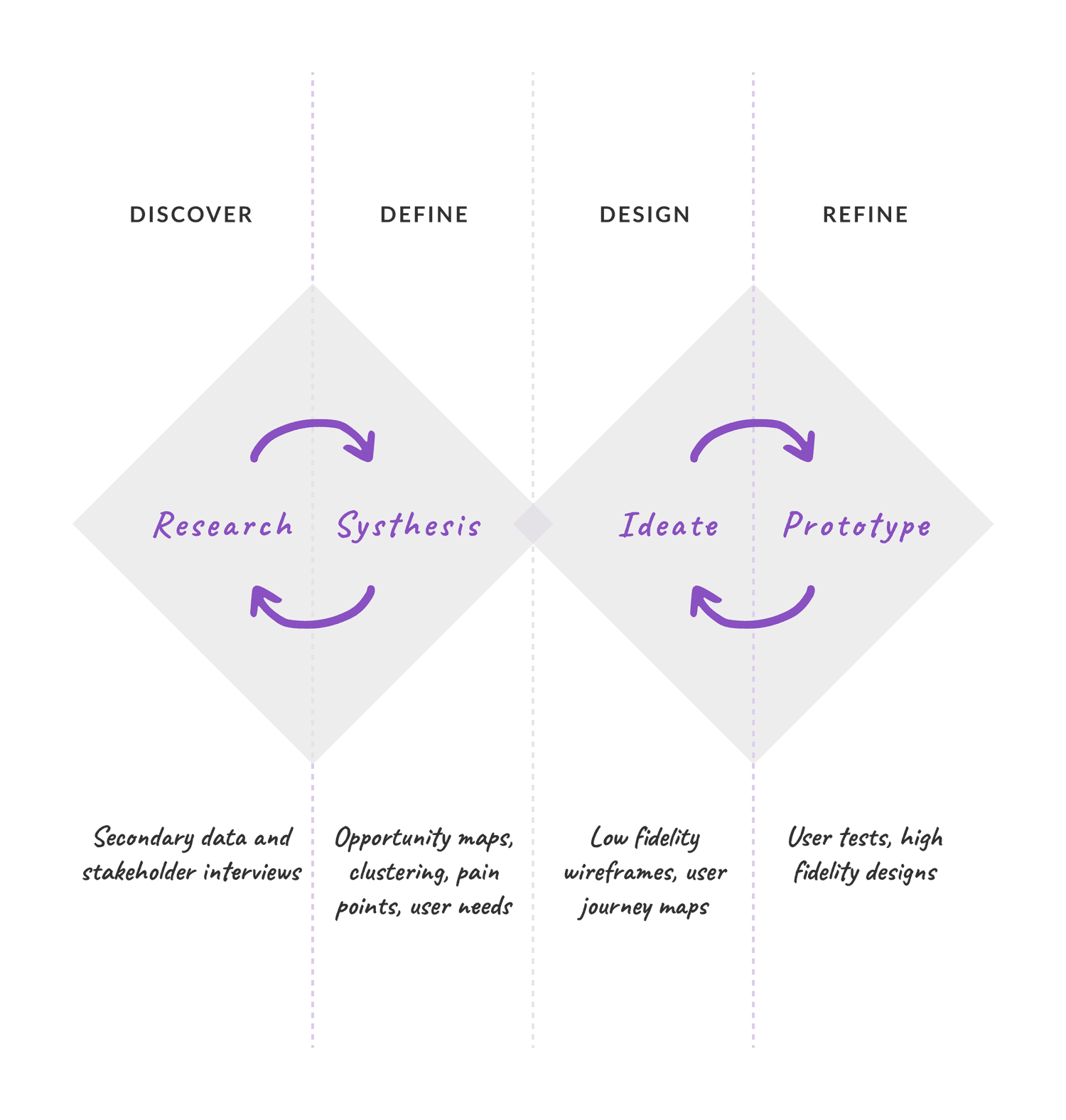
Used the Double Diamond approach for solving this problem. The highly iterative framework of the method helped us validate our ideas and concepts multiple times from different perspectives.
Research Phase
We used multiple sources and methods to find data and validate our findings along the way. Here’s an overview of the types of research methodologies we employed.
Literature Review
We went through research papers, journal articles, blogs, newspaper readings, and statistical data as a part of our secondary research. This was the data we found out in the problem space that we wanted to explore
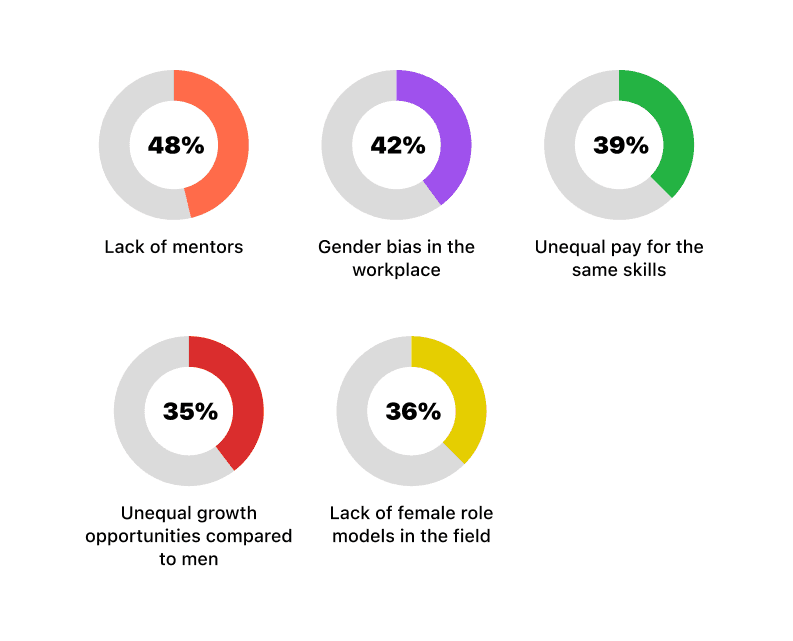
According to 500 individuals who were questioned globally, the following are main causes of women's underrepresentation in technology.
Interviews
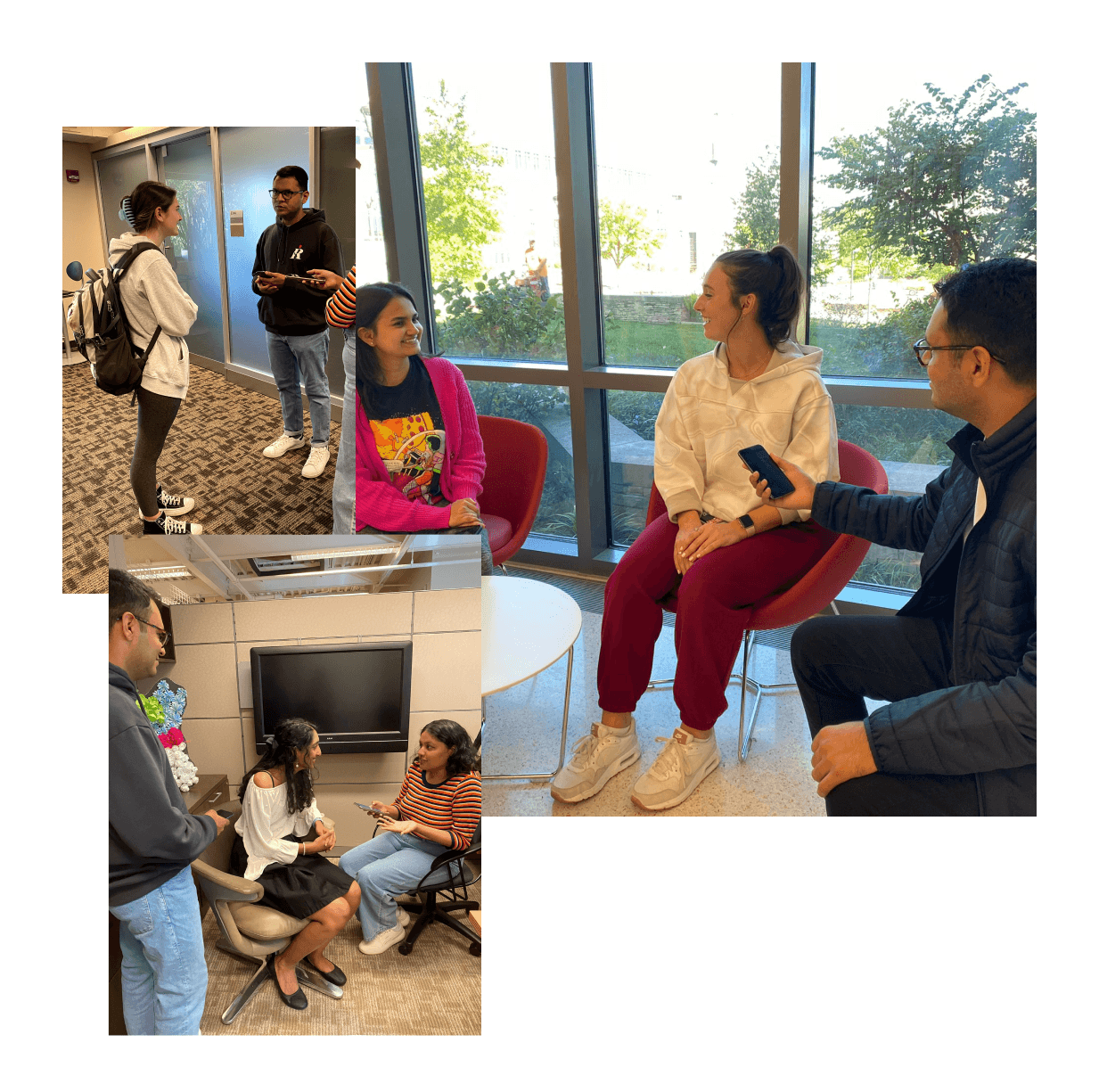
We interviewed different user groups and stakeholders, such as professionals, students, teachers, mentors, to gain holistic insights. This helped us get first-hand feedback, find unique challenges, and opportunities to fill the gap.
Define Phase
Created affinity mapping, personas, and competitor analysis to understand more about the user's problems.
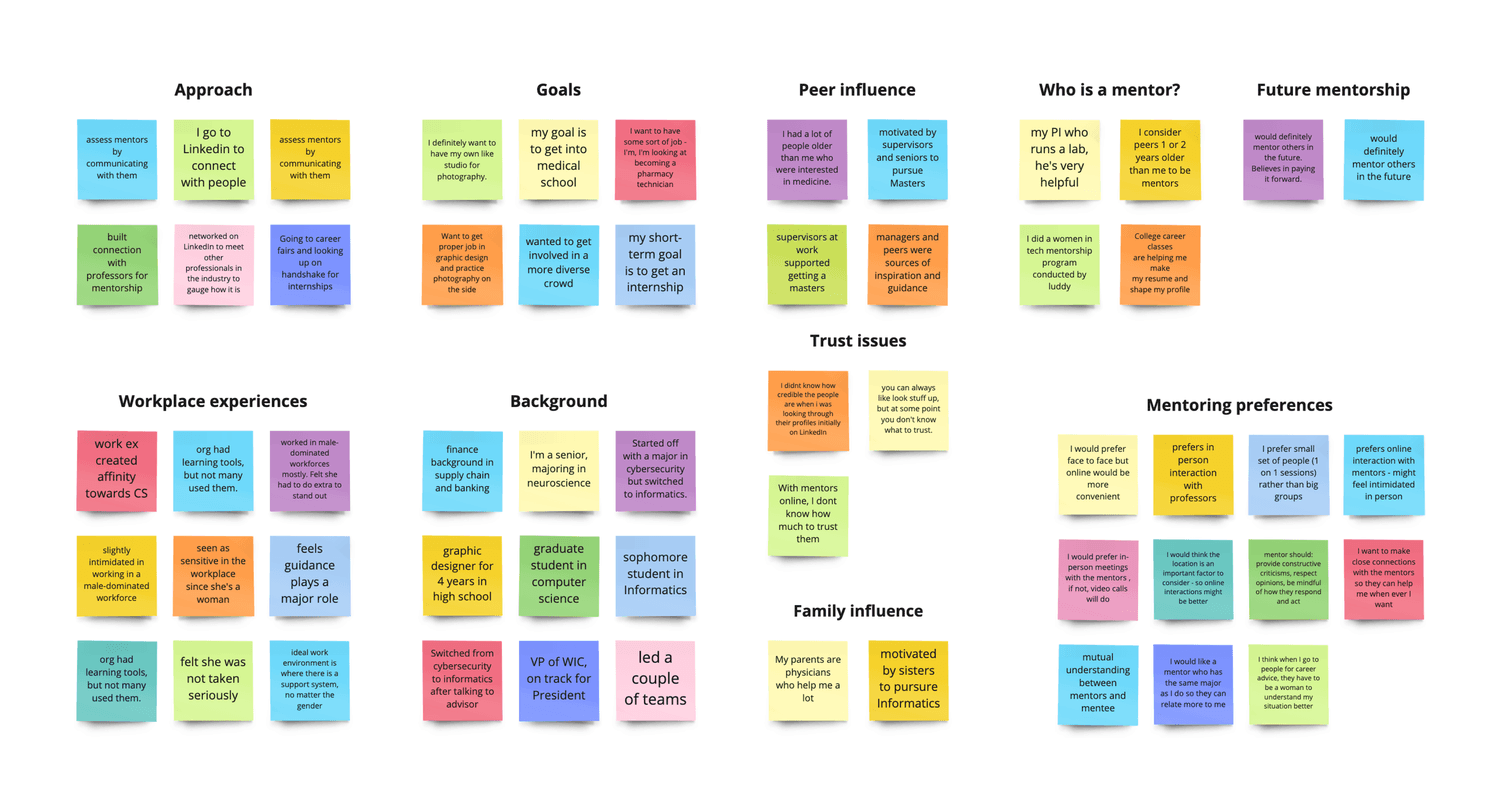
Affinity Mapping
This collaborative exercise helped us categorize our data in a more meaningful way. Based on the themes found, we could do adopt a more targeted approach towards tackling the problem.
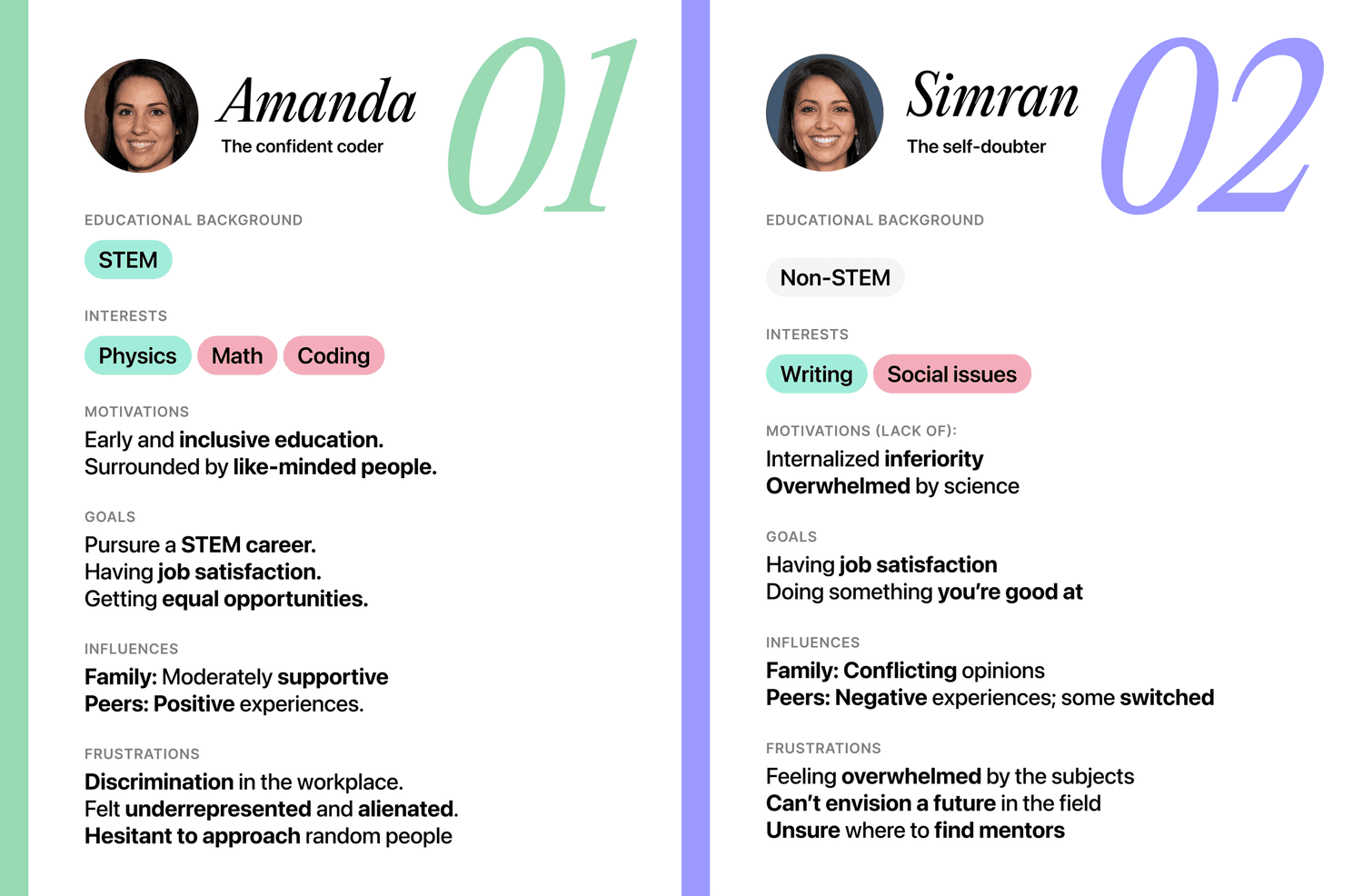
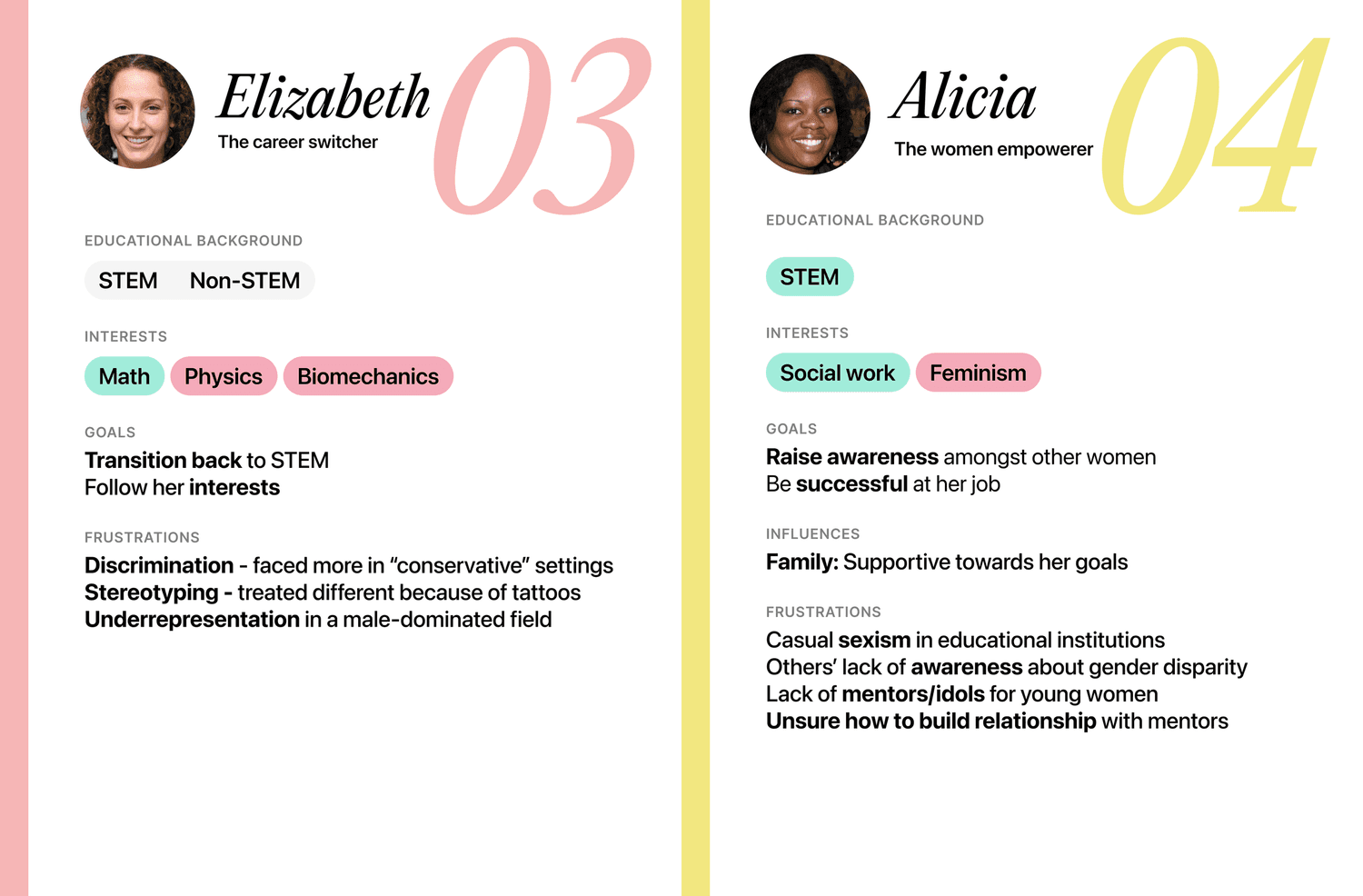
User Personas
We created user personas to synthesise the data from the interviews and affinity mapping
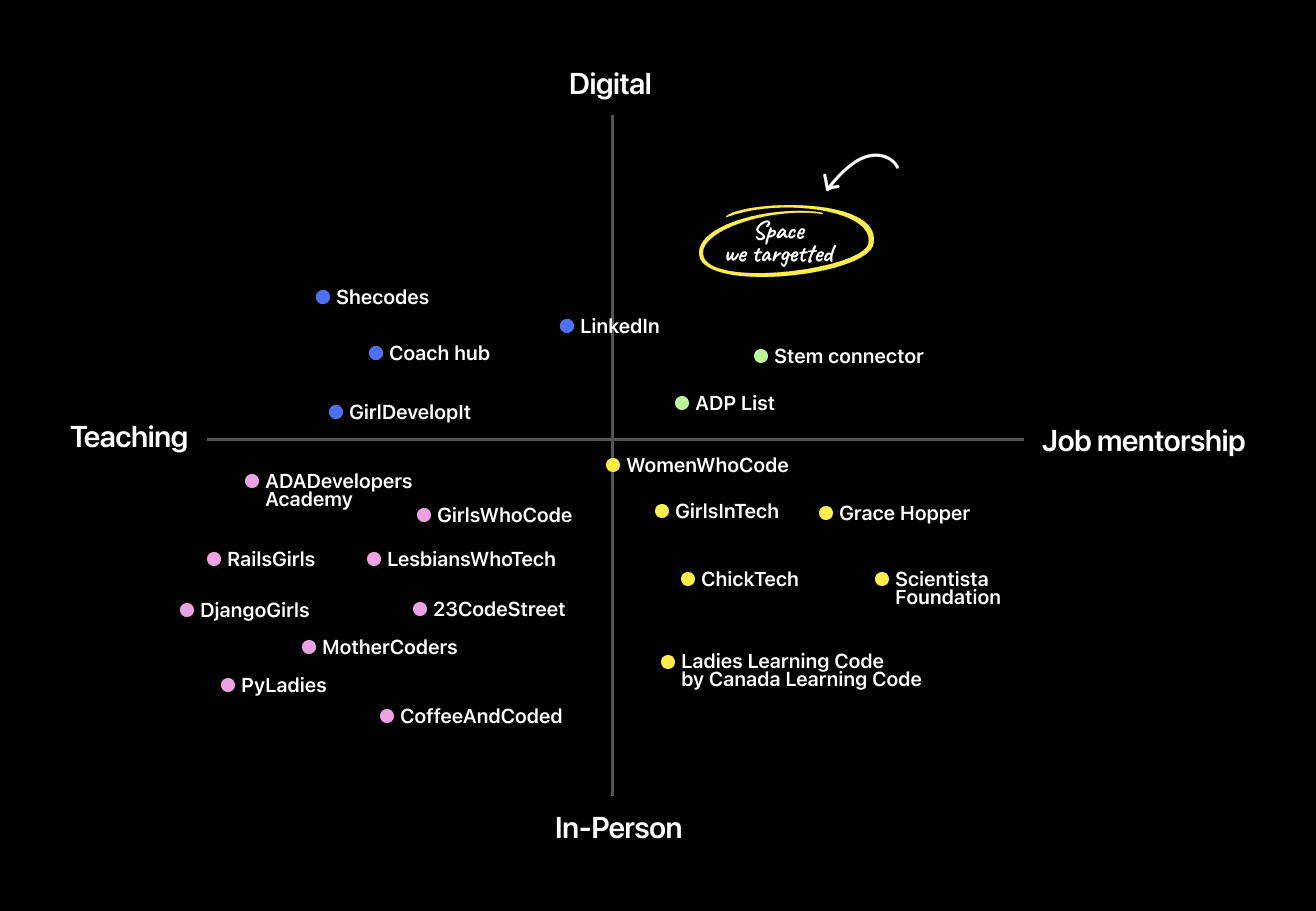
Competitive Analysis
To get a solid understanding of how other similar products are solving the problem and to lay out a solid foundation, we did a competitor analysis. Looking at existing solutions made us aware of the prevalent gaps and potential opportunities to augment our solution.
Pain points being addressed / product opportunity gap
Based on the insights from secondary research, interviews, competitive analysis, we found and decided to address the following pain points.
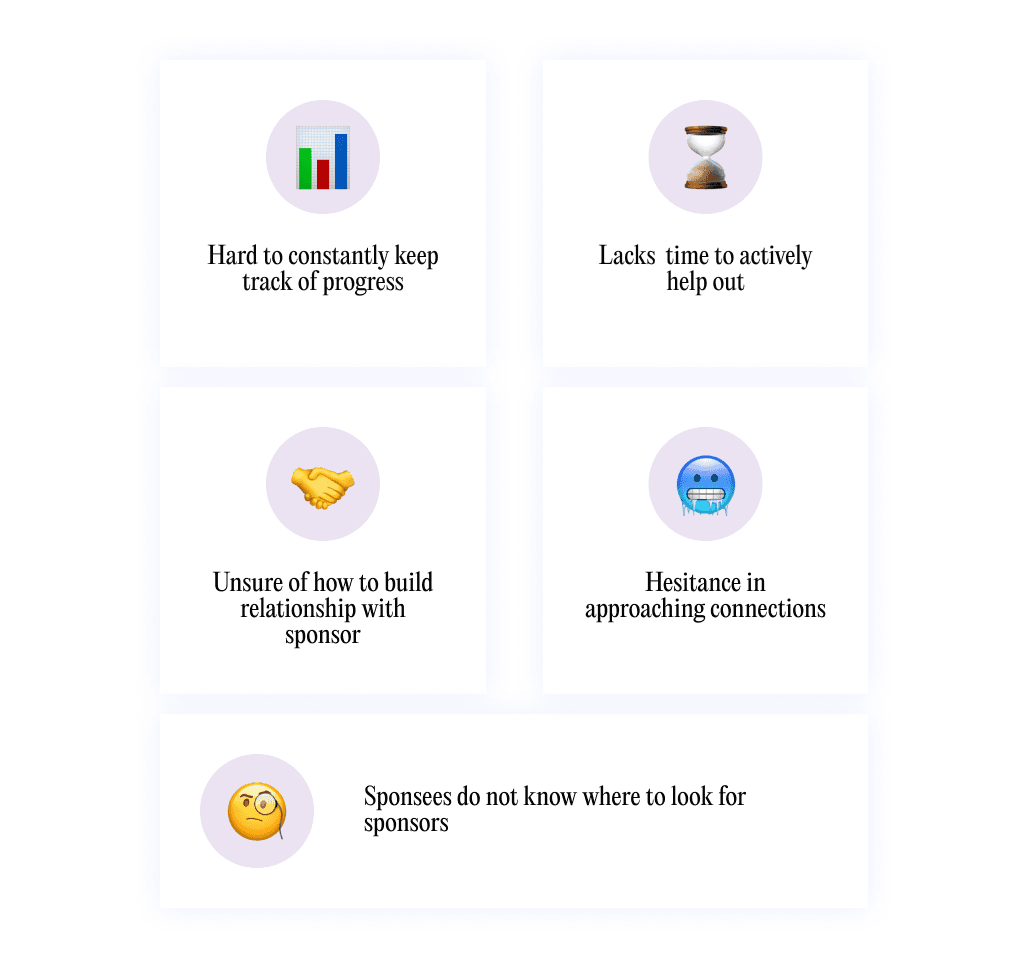
User Needs:
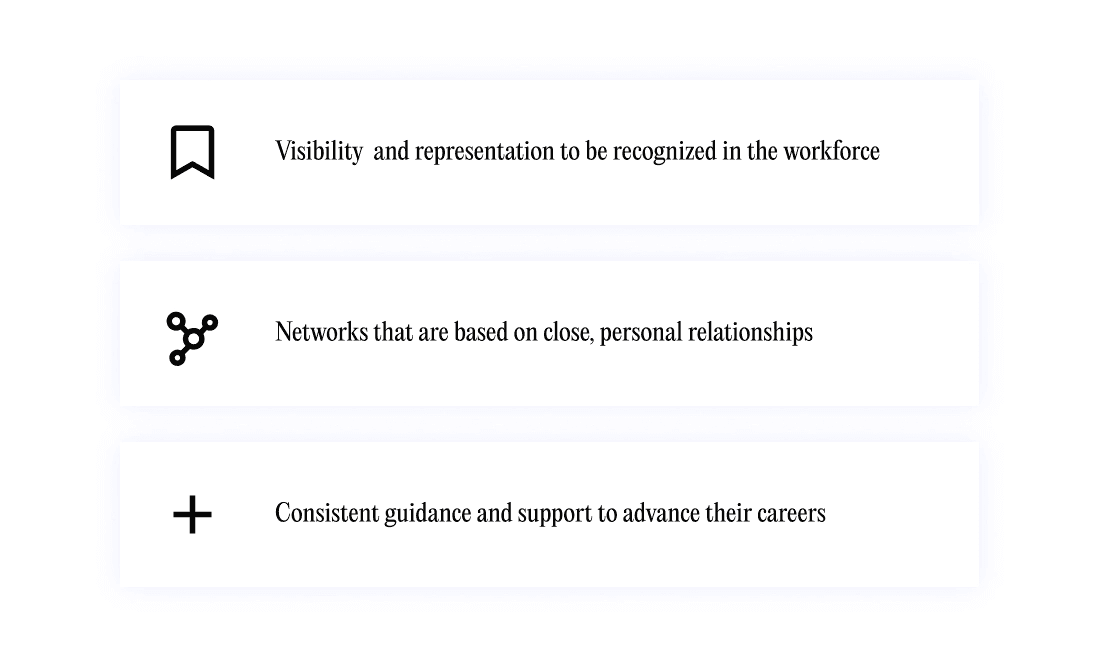
Ideation Phase
Created ecosystem to learn more about the domain, task flows to align design decisions with user's behavior, and information architecture to understand the domain and IA which forms the basis for the app.
System Scenario 1
Sponsor and sponsee onboarding, and using the query sheet.
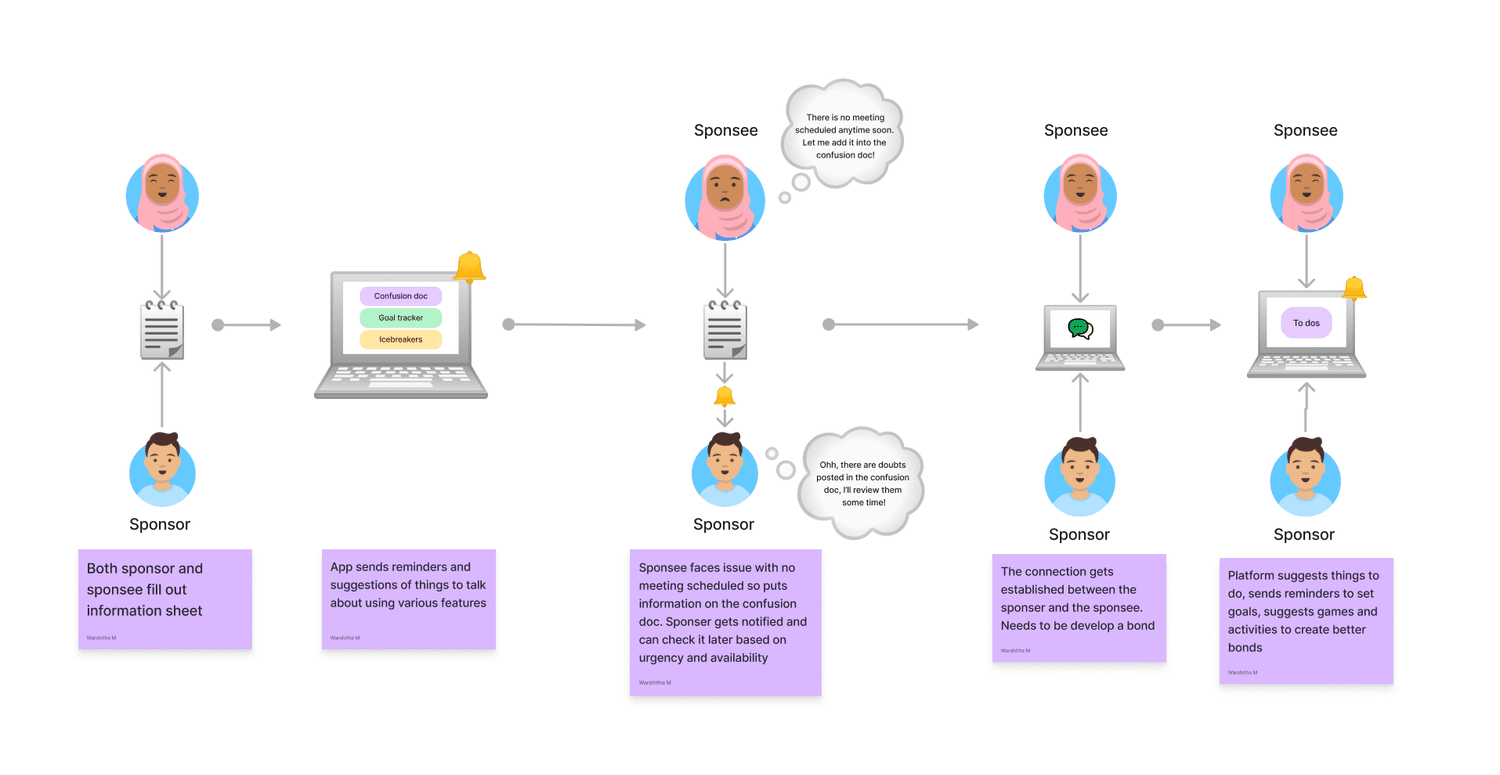
System Scenario 2
Curated networks for sponsees, and reflection documents.
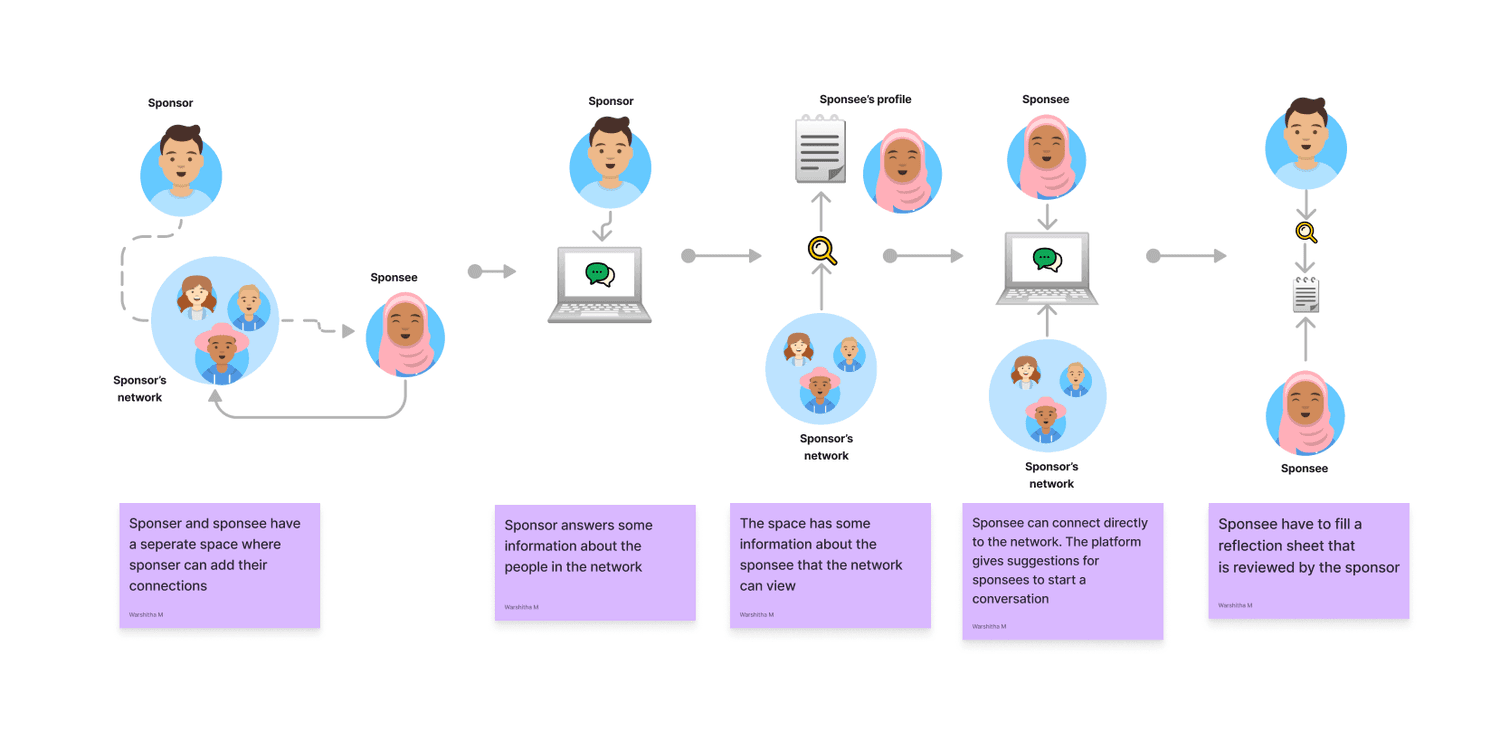
Synthesis
Initial iterations and User testing
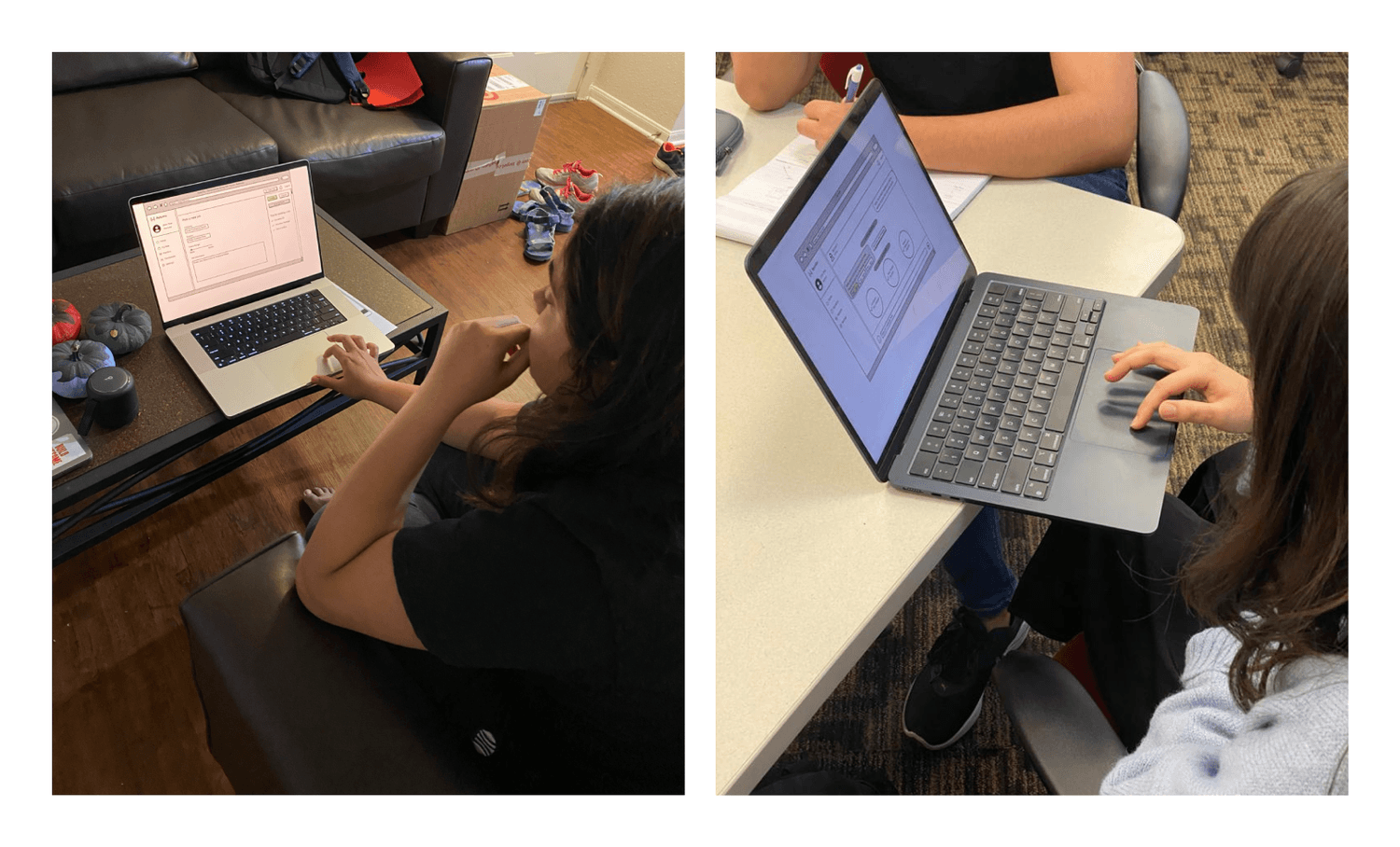
From the insights we go we came up with our concepts and made low fidelity and high fidelity prototypes. We then went ahead and tested them with the users. We got some suggestions on information architecture, copywriting and navigation in the designs. We used this data to go back and forth and iterated the designs according to it.
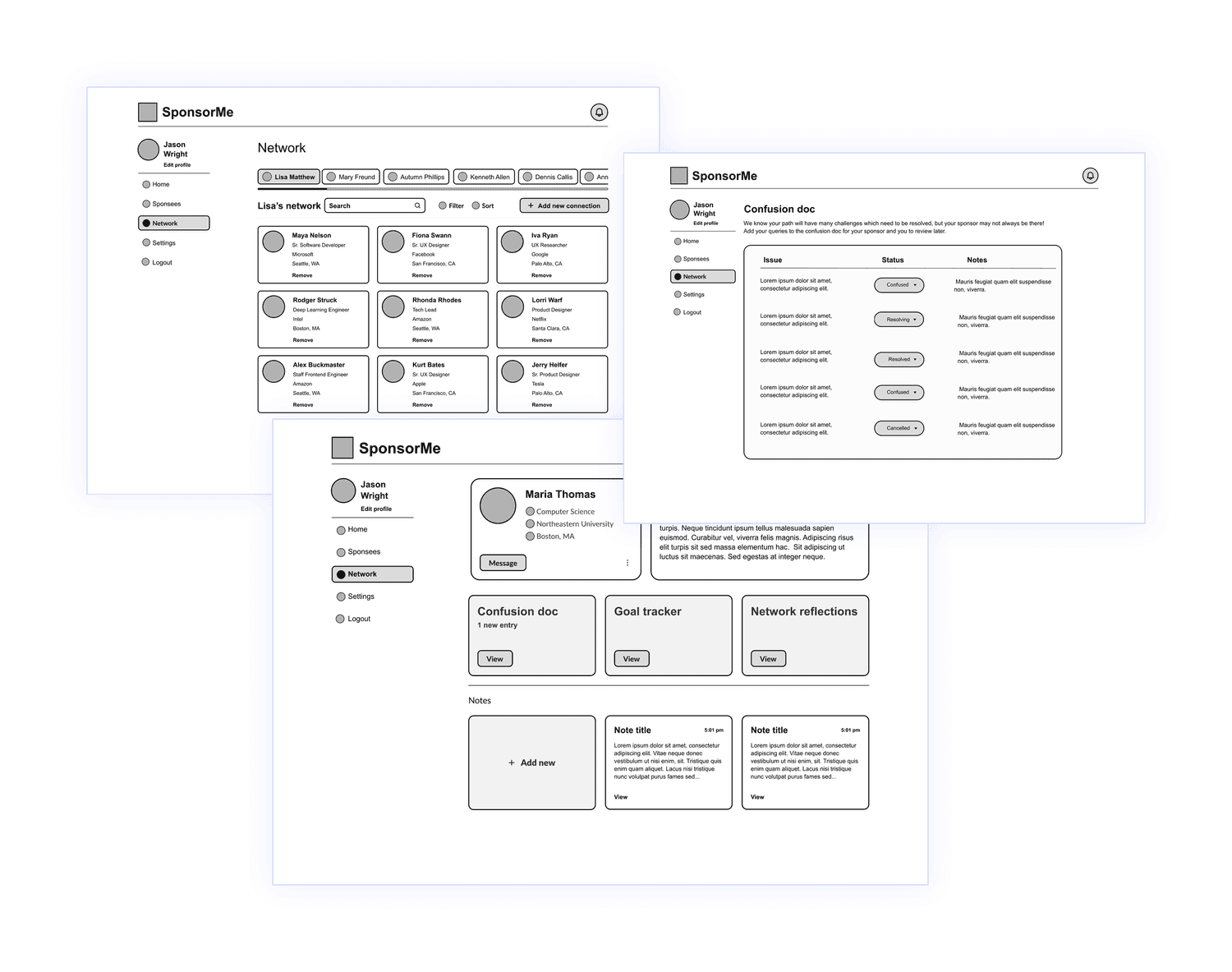
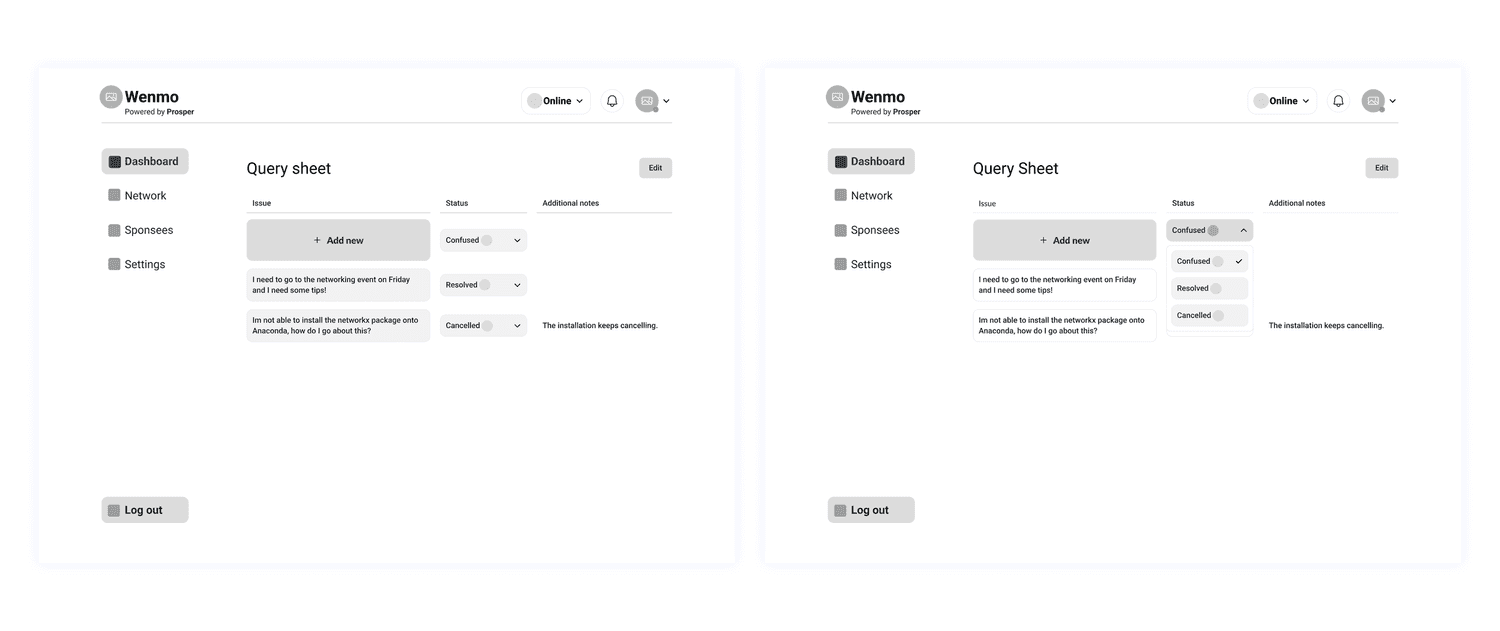
Mid-fidelity Wireframes
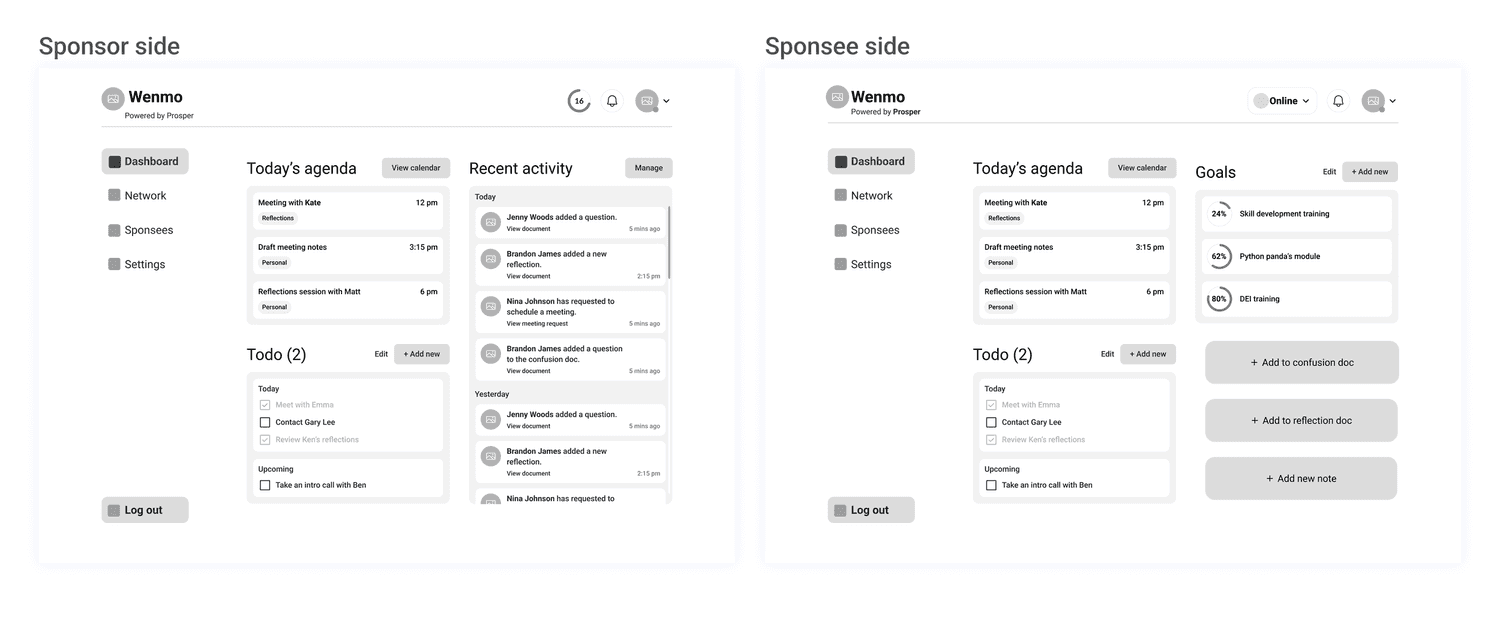
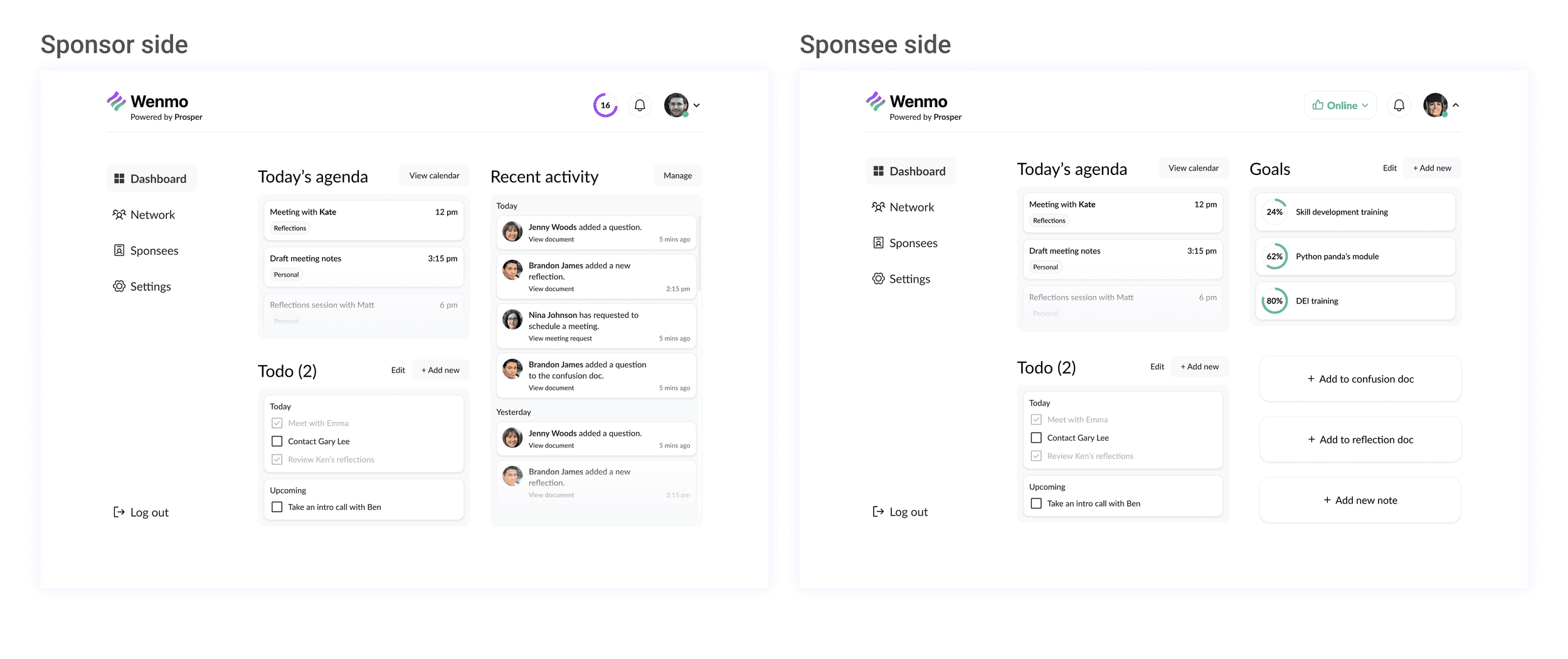
Sponsor and sponsee side dashboards
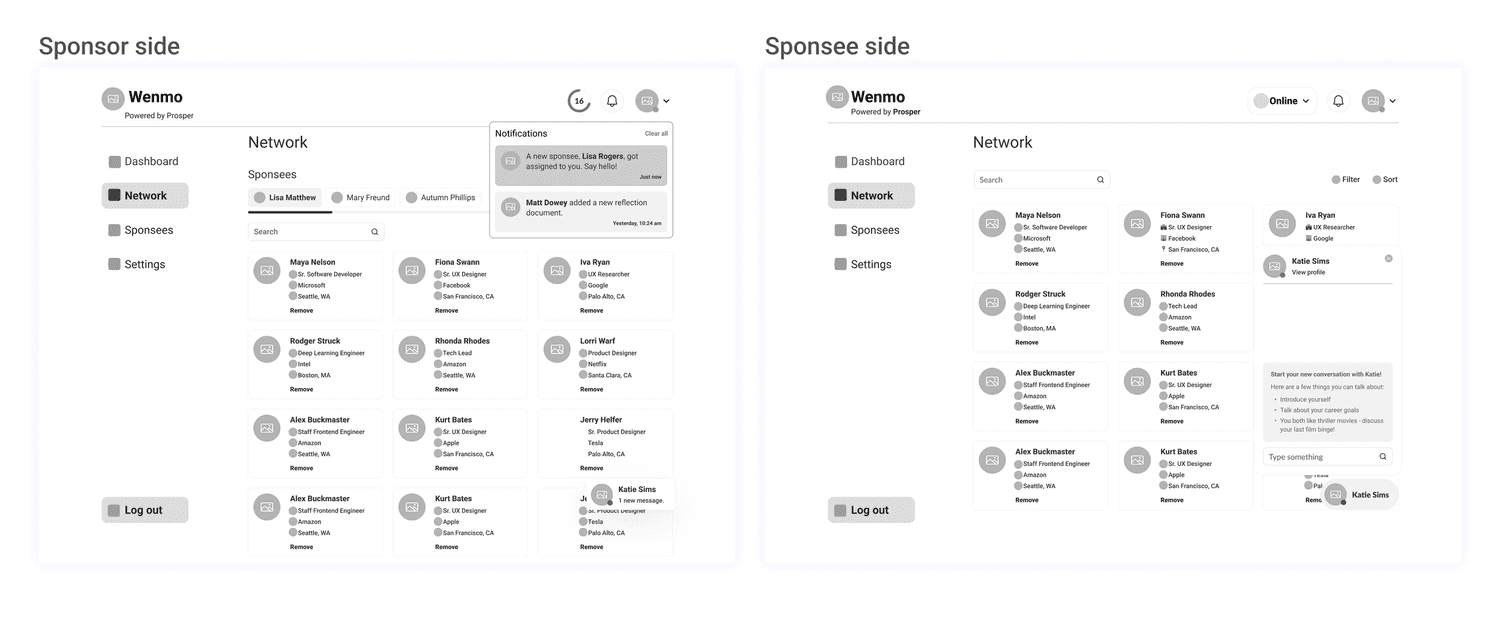
Network flow
Query Sheet Flow
Final Designs
Dashboards
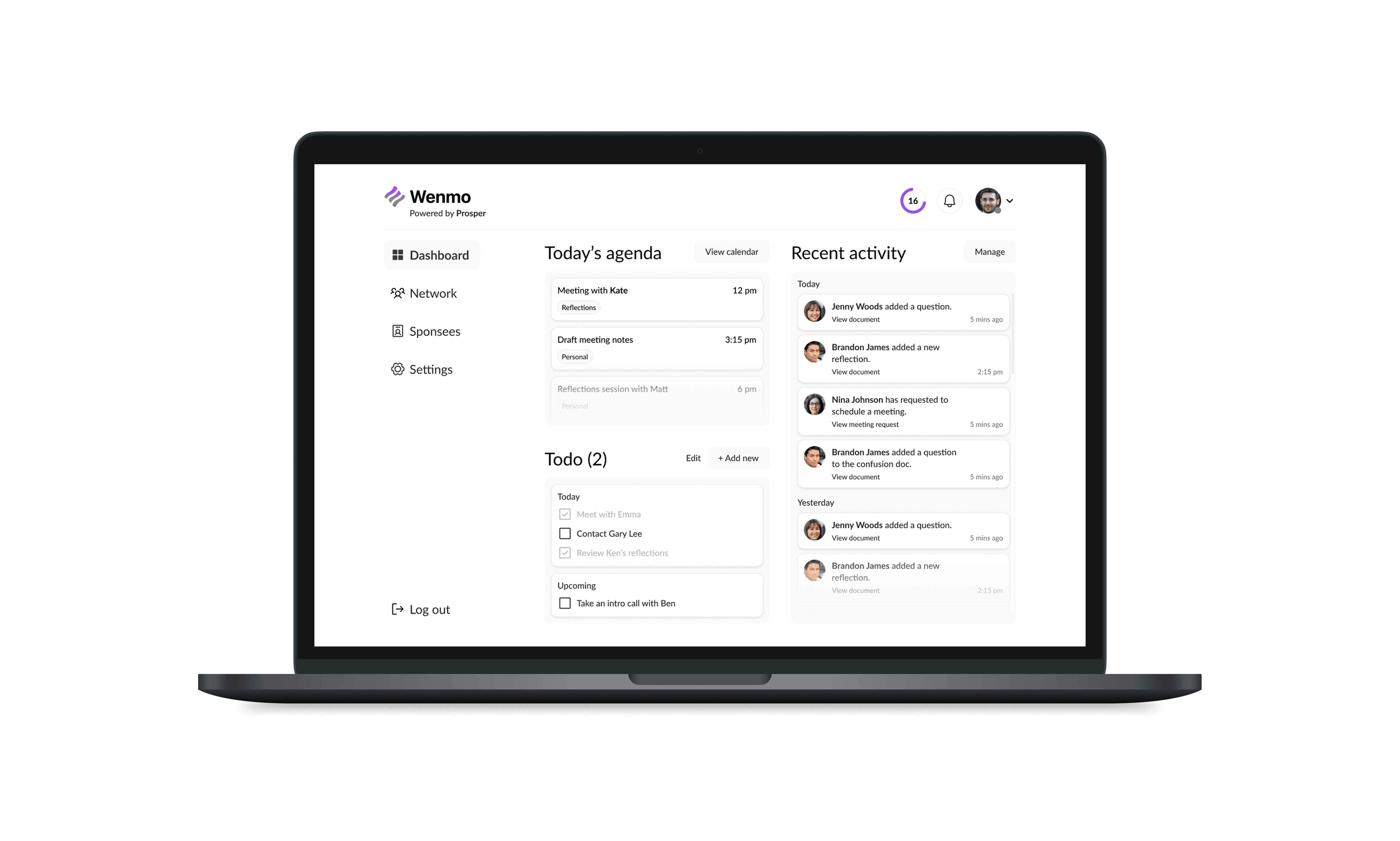
Dashboard makes it easy both the sponsee and the sponsor to stay up to date with the program.
Today’s agenda shows all the upcoming events during a day, and todo’s complements it by enlisting all kinds of tasks that need to be done.
From a sponsor’s point of view, recent activity helps them stay on track and in the loop.
For the sponsees, the goal tracker feature helps them track their progress and keeps them motivated.
Needs addressed:
Difficult to find common time to connect
Hard to track progress constantly
Query Sheet
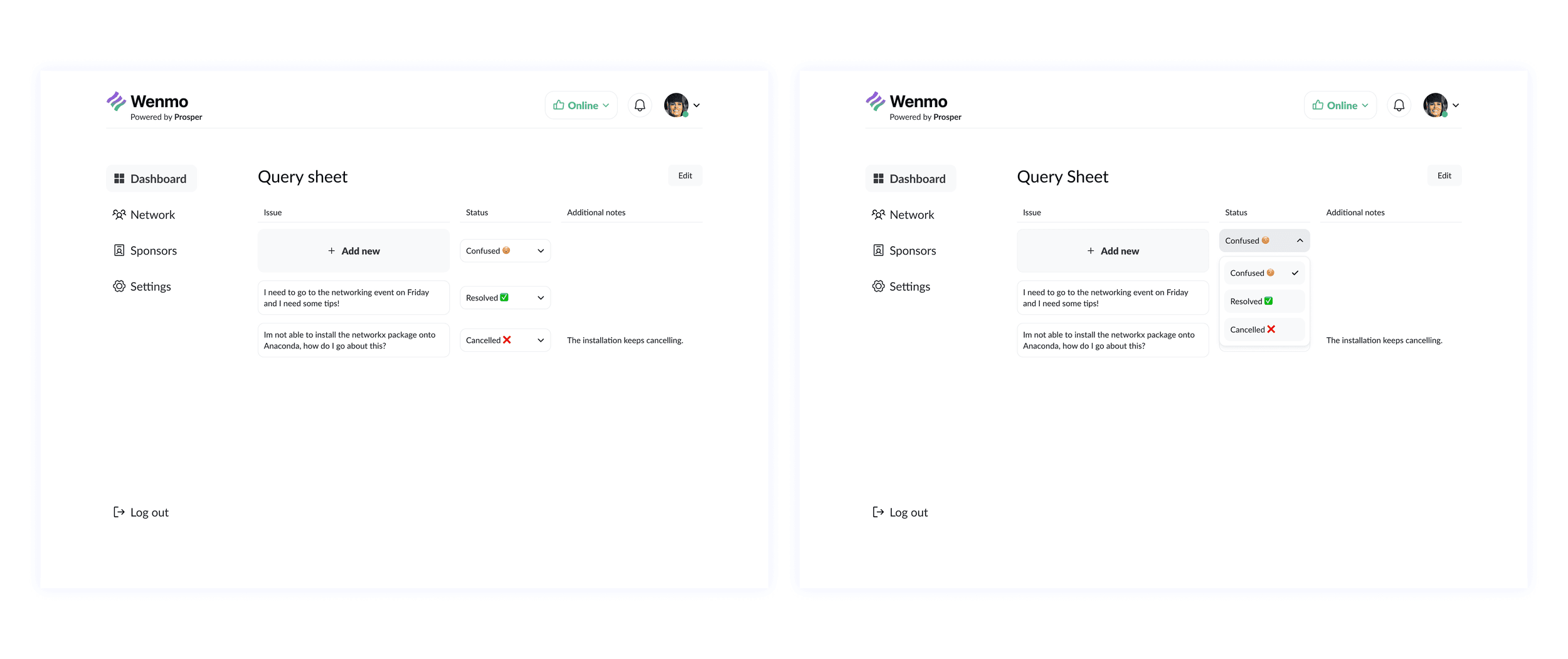
Both sponsors and sponsees have access to a query sheet wherein they can post issues and resolve them collaboratively.
This feature emphasises the “asynchronous” theme of the platform, which provides flexibility and leeway to both parties.
Needs addressed:
Difficult to find a common time to connect.
Hard to track progress constantly.Hard to track progress constantly.
Availability Status
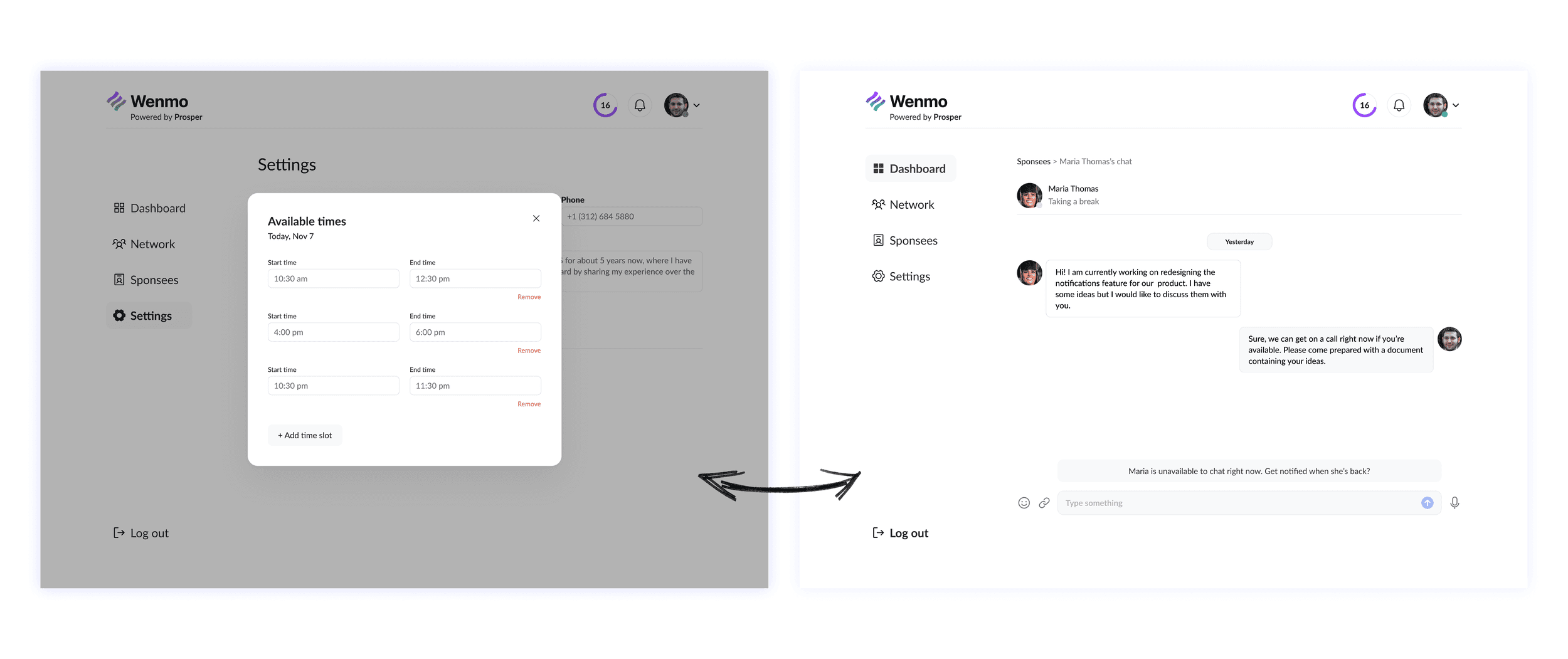
Building upon the asynchronous value, we introduced availability status feature that lets both the sponsor and the sponsee determine available time slots. The person can’t be bothered with messages while away.
Not only this feature promotes empathy from both ends, it also helps the users manage their time well, and go on a respite when needed.
Needs addressed:
Difficult to find a common time to connect.
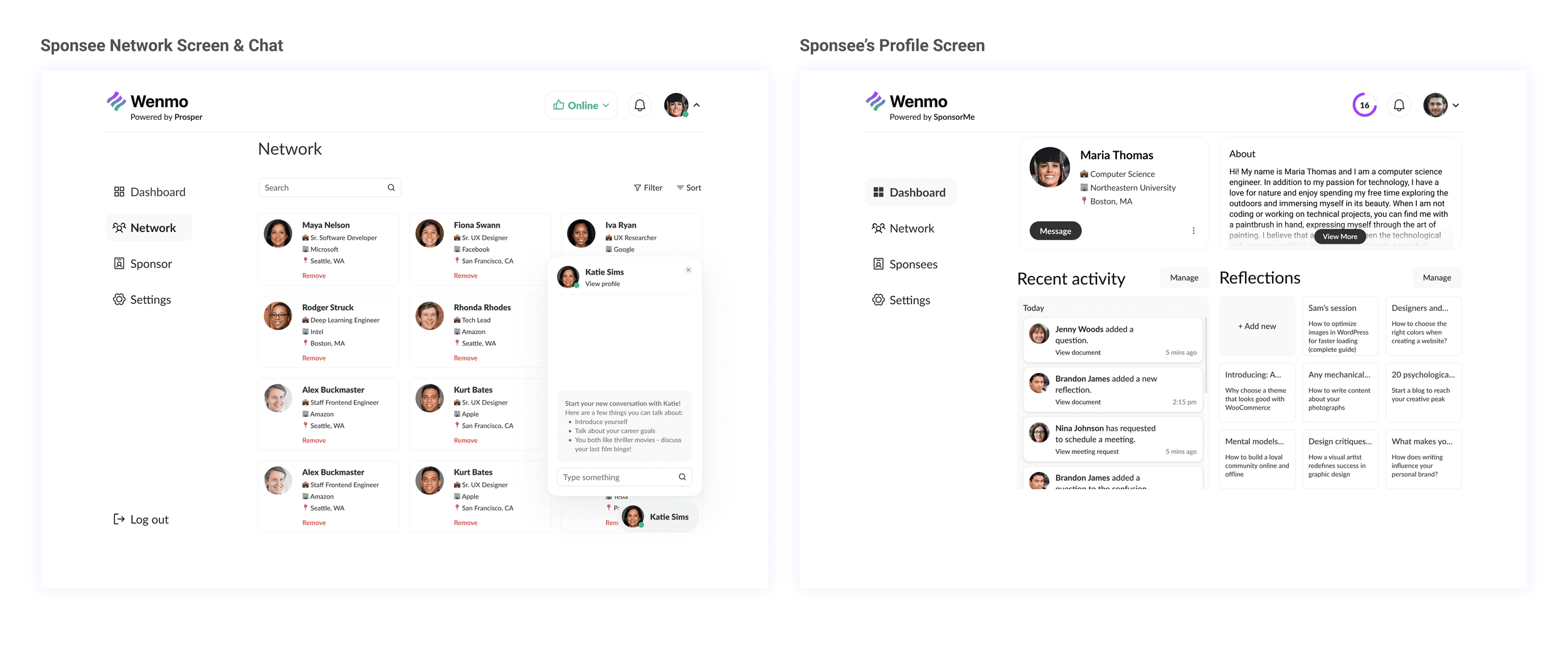
Network and Chat
Each sponsee can benefit from his or her sponsor’s network. This network would be curated by the sponsor based on the experiences, needs, and aspirations of the sponsee.
The sponsee is already introduced to the network via his/her profile, and can directly reach out to them. The chat feature suggests common topics to talk about, which helps in breaking the ice.
Needs addressed:
Hesitant to approach random people.
Unsure where to find sponsors.
Takeaways
This was a very research heavy project and I learnt how to effectively perform secondary and primary research. I had to conduct expert interviews for the first time which was very insightful. The project helped me to learn about how we need to explore multiple ideas to get to a solution that actually matter and is useful for the user and also helped me understand the importance of talking to the users and professionals in this field.